
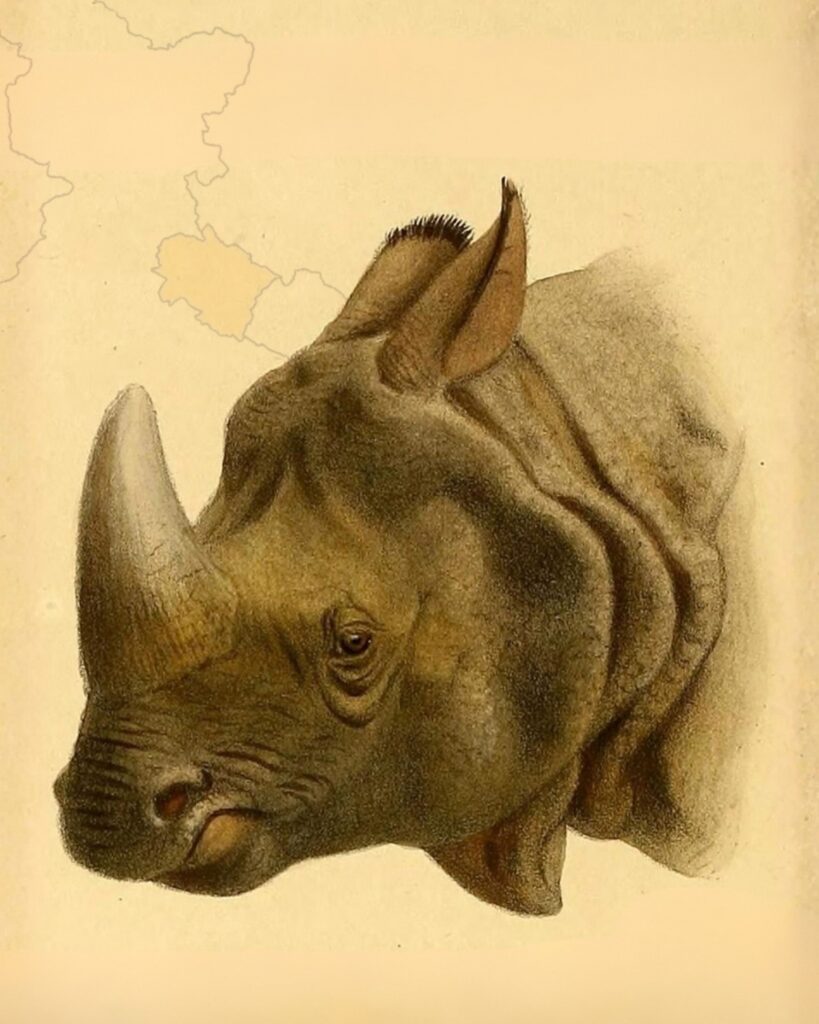
When you think of the Great Indian Rhinoceros, which place comes to your mind? Assam, of course, you would say. Some would say West Bengal, and some others might say Nepal. Some of you might even argue for Uttar Pradesh with the rhino reintroduction in Dudhwa that happened in 1984. A few of you might even argue for Bihar to be included in the list, since every now and then one or two rhinos migrate from Nepal into the Valmiki Tiger Reserve. But, in all likelihood, one state none of you would associate rhinos with is Uttarakhand. And yet, one of the earliest visual records of the Indian rhino in the wild comes from Kotdwara, once a small gateway town at the frontier of the Garhwal Kingdom at the foothills of the Himalayas, now a bustling city in south-central Uttarakhand.
Credit: Richard Lydekker/Raza Kazmi Personal Collection
Credit: Raza Kazmi Personal Collection
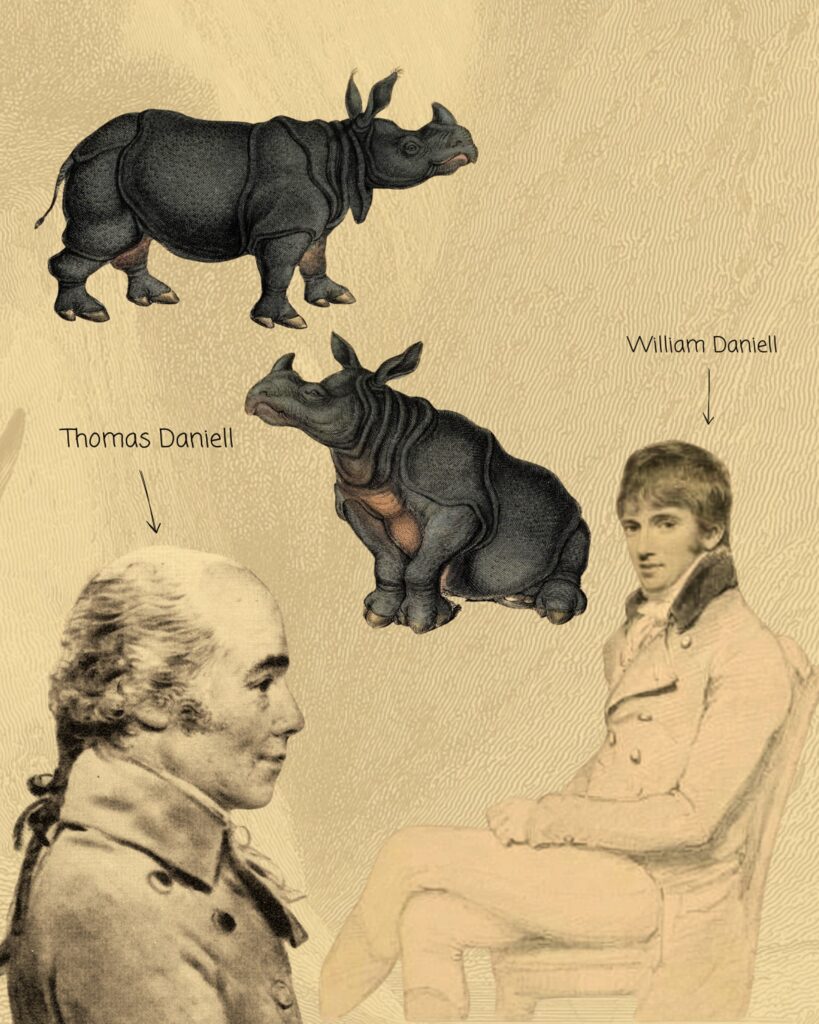
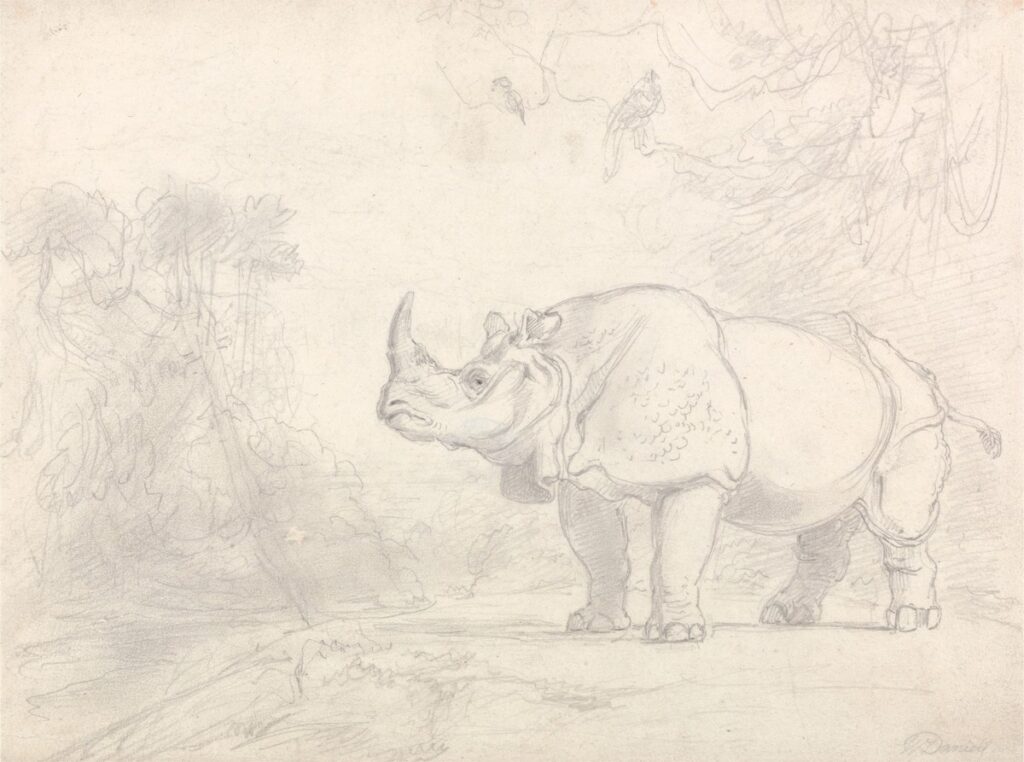
In 1789, British artists William Daniell and his uncle Thomas Daniell were on their way to Srinagar (in Garhwal) when they stopped at “Coaduwar Gaut” (Kotdwar Ghat). Here, on 20th April 1789, while out exploring the area around Kotdwar, they encountered a remarkable sight. Daniell writes:
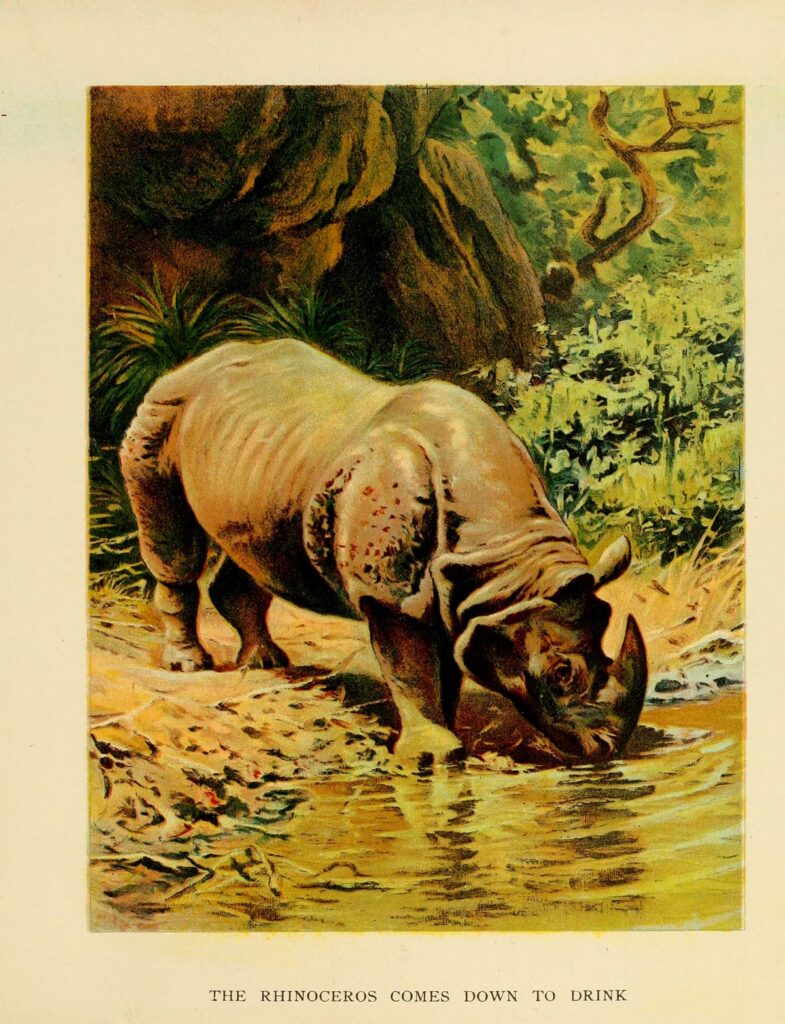
“We had turned the angle of a hill that abutted upon a narrow stream, when, on the opposite side of the rivulet, we saw a fine male rhinoceros; it was standing near the edge of the water with its head slightly bent, as if it had been just slaking its thirst in the cooling stream. It stood, apparently with great composure, about two hundred yards above us, in an open vista of the wood. Mr. Daniell, under the protection of a lofty intervening bank, was able to approach sufficiently near to make a perfect sketch of it; after which, upon a gun being fired, it deliberately walked off into the jungle.”
Credit: Raza Kazmi Personal Collection
The original field sketch of the Indian Rhinoceros, drawn by William Daniell at Kotdwar on the day of the encounter (April 20, 1789).
Credit: William Daniell/Raza Kazmi Personal Collection
William Daniell’s painting of the rhino seen at Kotdwar on 20 April 1789.
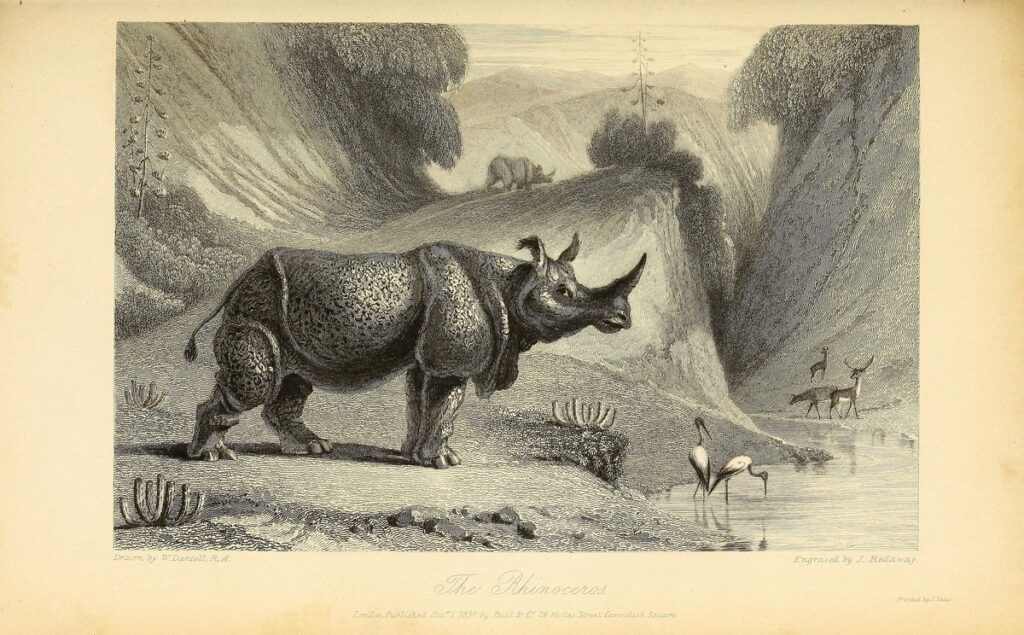
Credit: William Daniell/Raza Kazmi Personal Collection
Rhinos were once found as far west as Peshawar, where, according to Babur, they occurred in abundance and where a large hunt for them was organised in 1525. They even occurred at the foothills of what is now Sirmaur district in Himachal Pradesh.
A finished oil painting version (c. 1790) of the Kotdwar rhino sighting by Thomas Daniell.
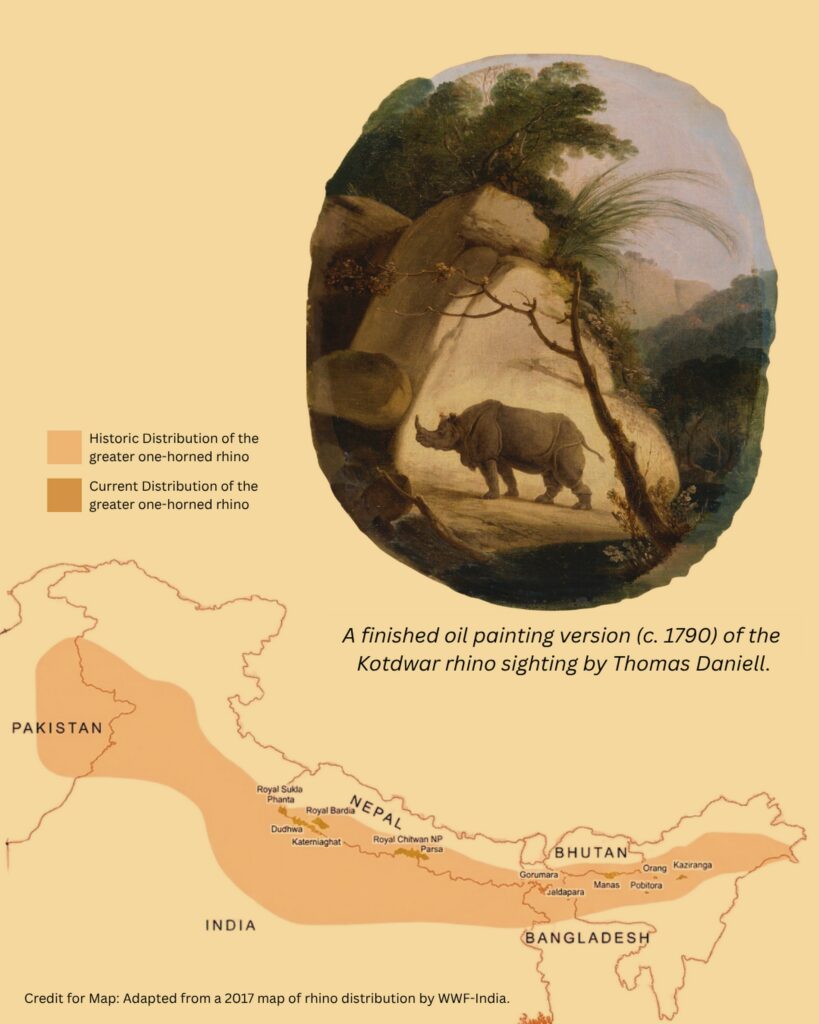
Credit: Thomas Daniell/Raza Kazmi Personal Collection. Credit for Map: Adapted from a 2017 map of rhino distribution by WWF-India.
But Kotdwar, apparently, was not the only place in Uttarakhand where rhinos occurred. There were rumours of their presence in a ‘Doon’ (valley) in what is now western Uttarakhand, a place called “Deyra Doon”!
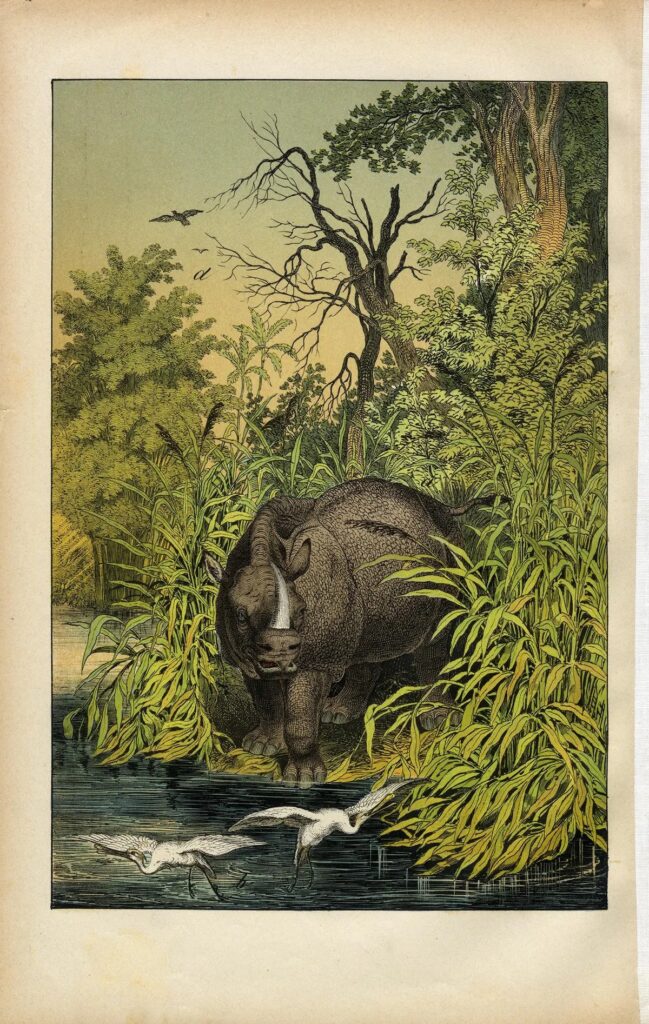
Credit: Thomas Daniell/Raza Kazmi Personal Collection.
What happened to the rhinos of Dehradun? Well, that is a story for another day.
About the Author: Raza Kazmi is a conservationist, wildlife historian, storyteller, and researcher. He is a Conservation Communicator at WCT and writes in both English and Hindi languages. His writings appear in national newspapers, online media houses, magazines and journals, and various edited anthologies. A recipient of the New India Foundation Fellowship for 2021, he is currently writing a book tentatively titled ‘To Whom Does the Forest Belong?: The Fate of Green in the Land of Red’.
Disclaimer: The author is associated with Wildlife Conservation Trust. The views and opinions expressed in the article are his own and do not necessarily reflect the views and opinions of Wildlife Conservation Trust.
Your donations support our on-ground operations, helping us meet our conservation goals.