
In the last couple of years, our suspicions about the presence of the endangered fishing cat in the river floodplains across north Bihar were confirmed when news reports of this elusive species began to emerge from various localities in the region. Unfortunately, all reports except one, were about fishing cats being killed on roads and highways due to vehicular traffic or ‘found dead’ due to unknown causes. That’s when we, a team of river ecologists and wildlife biologists working with Wildlife Conservation Trust (WCT), on the Riverine Ecosystems and Livelihoods Programme and Makara programmes, respectively, decided to investigate the occurrence of the fishing cat in the region using systematic surveys.
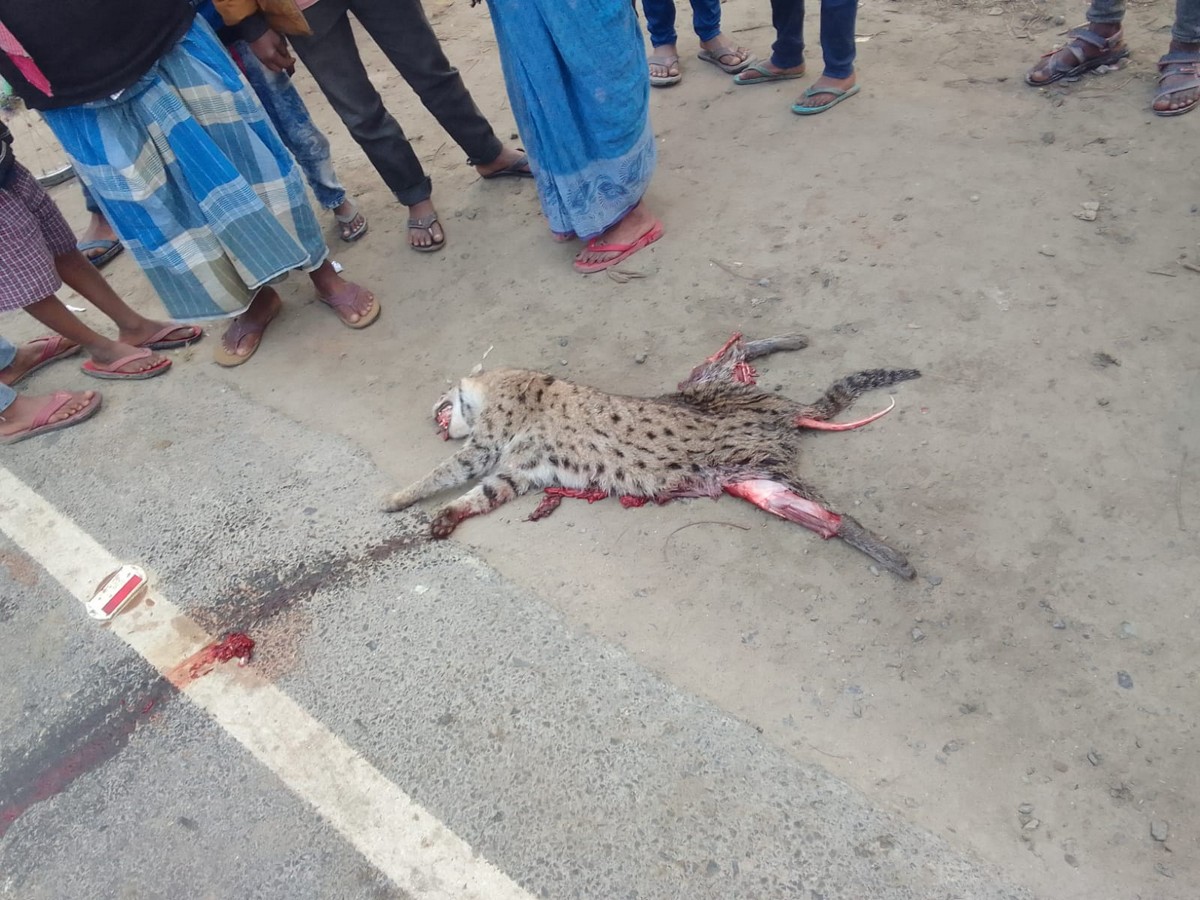
A fishing cat roadkill somewhere in Vaishali district, Bihar. Photo: Local informant.
With support from The Habitats Trust, we embarked on the fishing cat surveys. We started by talking to people in and around the typical natural habitats of the fishing cat, mainly around artificial and natural wetlands, oxbow lakes dominated by reeds, etc. We simply showed them pictures of fishing cats along with other sympatric wild and domestic carnivore species (jungle cats, domestic cats, jackals, otters, dogs, etc.) to identify, and in turn asked them a few questions in order to gather old and new information on the species’ presence in the region. This was done to ensure that people did not confuse fishing cats with any of these animals, as their nocturnal and hunting behaviours tend to overlap. We covered 60 locations across six districts along the Gandak river-floodplains in north Bihar as part of the survey, which included the locations mentioned in the aforementioned news reports.
Fortunately for us, the survey efforts also yielded multiple chance encounters with fishing cats themselves, confirming their presence. Two of these encounters were in the form of unexpected direct sightings, and others were secondary sources from those people who had bothered to take photographs or videos of the fishing cat on their phones. One grainy but interesting video showed a fishing cat walking along a pond boundary with a fish in its mouth in full view of the onlookers!
Based on the reports and the information gleaned from people, our team began installing camera traps in October 2025, around natural ponds, aquaculture ponds, and other wetland locations where encountering fishing cats was most likely. The safety of the cameras too was a big factor in the selection of the sites, to avoid camera theft. But even after three months our camera traps failed to capture a fishing cat. Golden jackal, jungle cat, and nilgai were among the animals most photographed, including people, but no sign of the fishing cat.
Finally, by early February 2026, after persisting for many months and post several trials and errors, we managed to get our first camera trap evidence of the fishing cat near aquaculture ponds in the West Champaran (two captures) and Supaul (one capture) districts of Bihar. Our surveys thus confirmed through camera trapping, for the first time, the presence of this endangered felid in the Gandak floodplains of north Bihar, outside Valmiki Tiger Reserve.
A camera trap video of a fishing cat in a human-modified aquaculture pond area in northern Bihar. Source: WCT
The fishing cat is one of the least known animals in Bihar, despite people encountering it more regularly than previously thought. The reports of roadkills and persecution of the fishing cat out of fear, now emerging quite frequently, goes to show the serious threats to the survival of the species in this human-dominated landscape. People often mistake a fishing cat for a leopard cub or young leopard, which leads to unnecessary panic and reactive behavior.
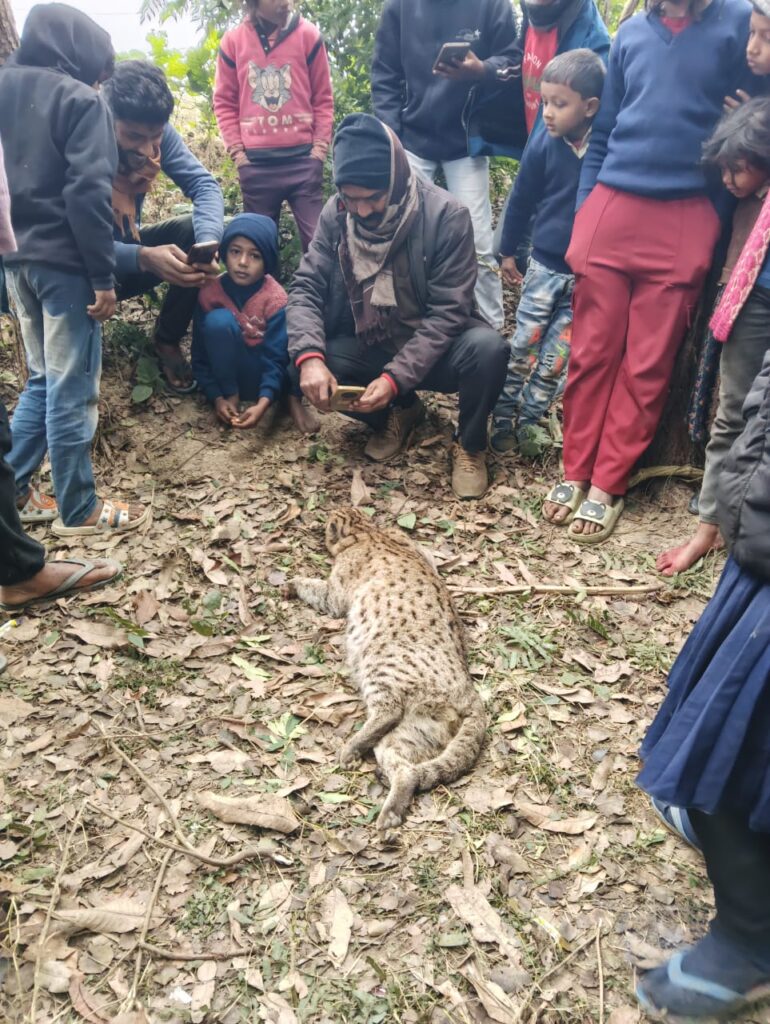
A fishing cat recently found dead in a village in Paschim Champaran, Bihar. Photo: Local informant.
Our camera traps are still installed in all the locations and the search for the elusive fishing cat continues in sites where the cameras haven’t yet yielded any visual evidence. Our initial findings emphasise the need for immediate attention and action for fishing cat conservation in northern Bihar. We now plan to start work on increasing local awareness and developing goodwill for the species among local pond owners and farmers with the aim to reduce unwarranted fear and persecution.