
Imagine standing in an Indian forest a little over a century ago. There was a very real chance that somewhere in those woods, a tiger was watching you.
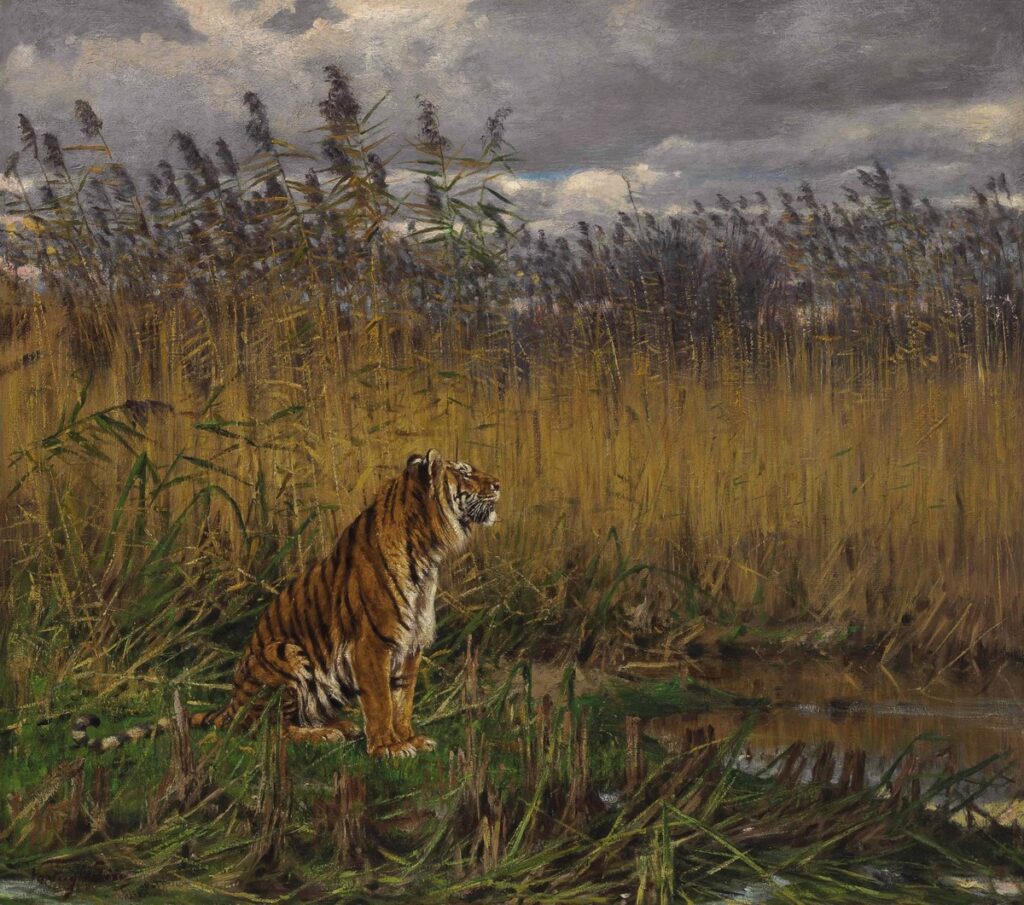
Photo credit: Raza Kazmi Personal Collection
At the turn of the twentieth century, India was home to tens of thousands of tigers. The oft-repeated figure is that we may have had as many as 40,000 tigers. That famous number, however, wasn’t recorded in 1900. It was an informed estimate made in 1964 by the eminent naturalist and conservationist E.P. Gee, who looked back at the historical abundance of tigers before their catastrophic decline. When later asked how he had arrived at the figure of 40,000, Gee is said to have chuckled and remarked, “Some number is better than no number.” It was his way of acknowledging that the figure was never intended to be an exact count. The true number may have been somewhat higher, or somewhat lower, but we’ll probably never know.
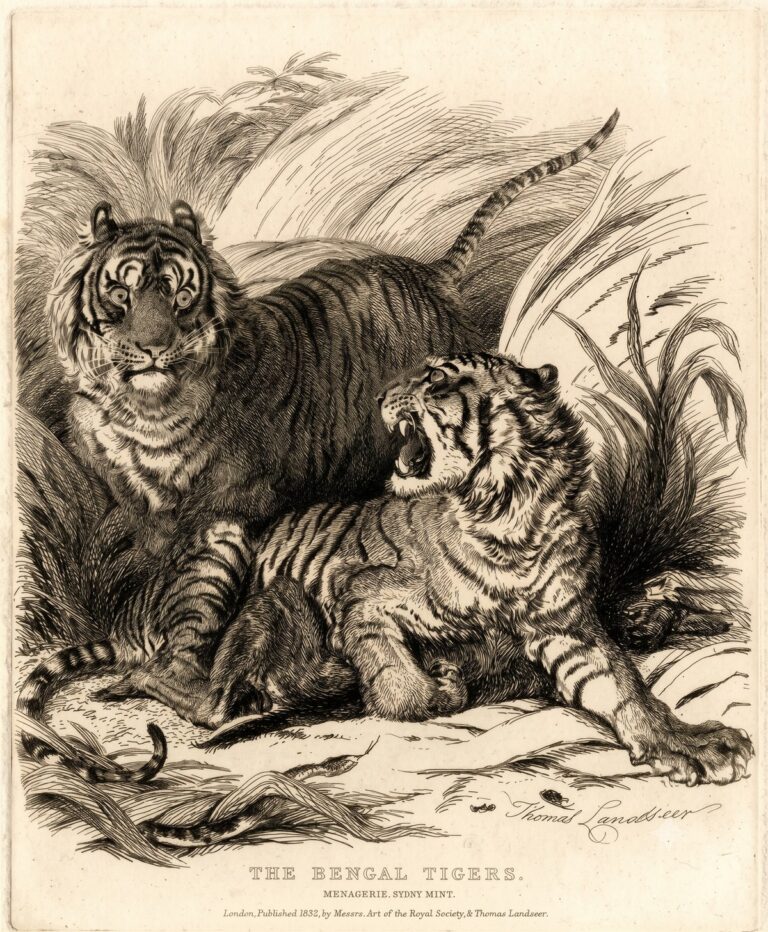
Photo credit: Raza Kazmi Personal Collection
What we do know for sure, however, is that within just a few decades, a country synonymous with the tiger came devastatingly close to losing its most iconic animal.
How did that happen?
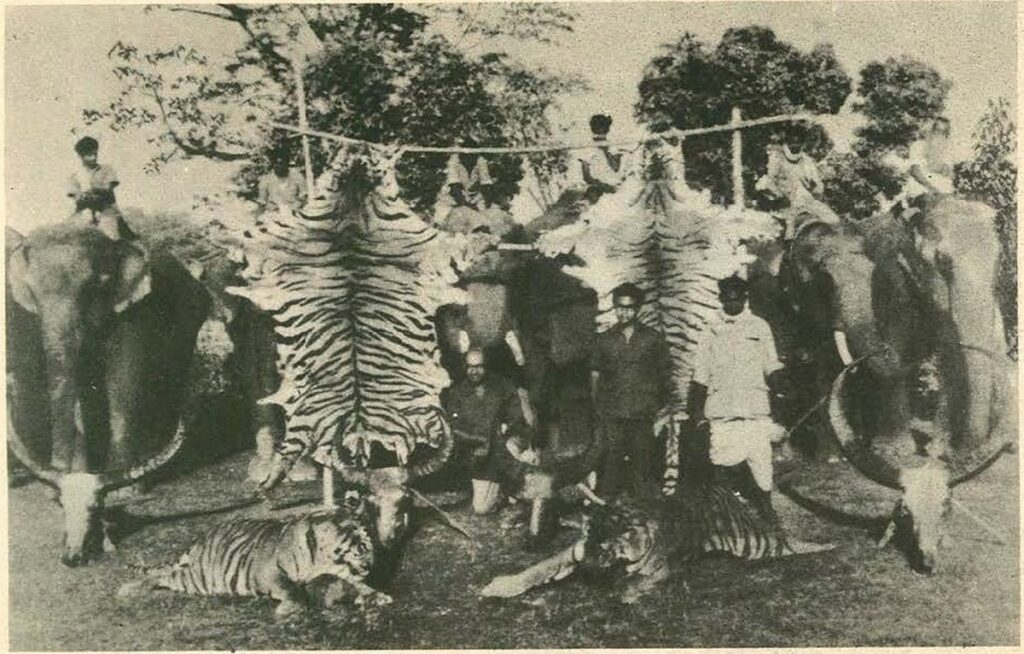
Photo credit: Raza Kazmi Personal Collection
The answer lies in one of the darkest chapters in India’s conservation history.
After Independence in 1947, a perfect storm unfolded, one that threatened to wipe out every last tiger. Gun licences were issued to all and sundry. For those with the means, thousands of surplus World War II jeeps gave hunters unprecedented access to remote forests. At the same time, large tracts of wilderness were cleared for farming, dams, infrastructure projects and post-Partition rehabilitation, especially in the Terai. Commercial Shikar Companies sprang up across the country, catering to wealthy, often foreign, clients. And as if all this weren’t enough, international demand for tiger skins was booming.
The result was a massacre.

Jim Corbett
(Photo credit: Public Domain)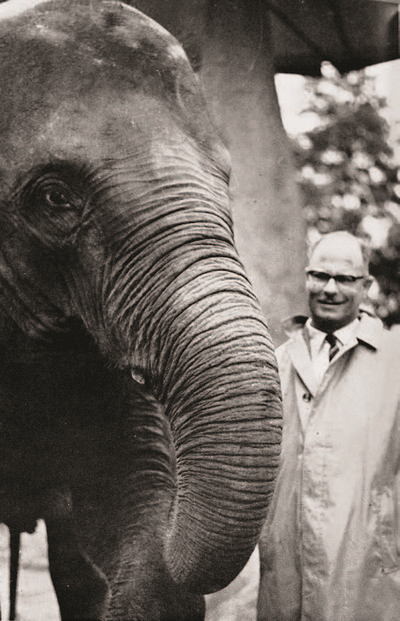
E.P. Gee (Photo credit: Hornbill/Bombay Natural History Society) 
Balakrishna Seshadri (Photo credit: Raza Kazmi Personal Collection)
The alarm bells began ringing surprisingly early. In 1953, Jim Corbett estimated that only 2,000 tigers remained in India. Two years later, in a letter published in The Times of London, he issued a chilling warning: unless something changed, the tiger would disappear from India within a decade, surviving only in a handful of sanctuaries and former princely states.
Other leading naturalists reached similarly alarming conclusions. In 1964, E.P. Gee estimated that only about 4,000 tigers survived in India after travelling extensively through tiger habitats across the country. Just four years later, in 1968, another distinguished naturalist, Balakrishna Seshadri, put the figure even lower, at around 2,500 tigers, based on his own extensive travels through India’s forests.
Meanwhile, the economics of the illegal wildlife trade told the same story. As forest officer and conservationist Kailash Sankhala observed, the price of a tiger skin had risen from about ₹300 in the 1950s to nearly ₹3,000 in the 1960s, reflecting dwindling supplies and soaring demand. By 1969, he estimated that Delhi’s fur shops alone held at least 500 tiger skins.
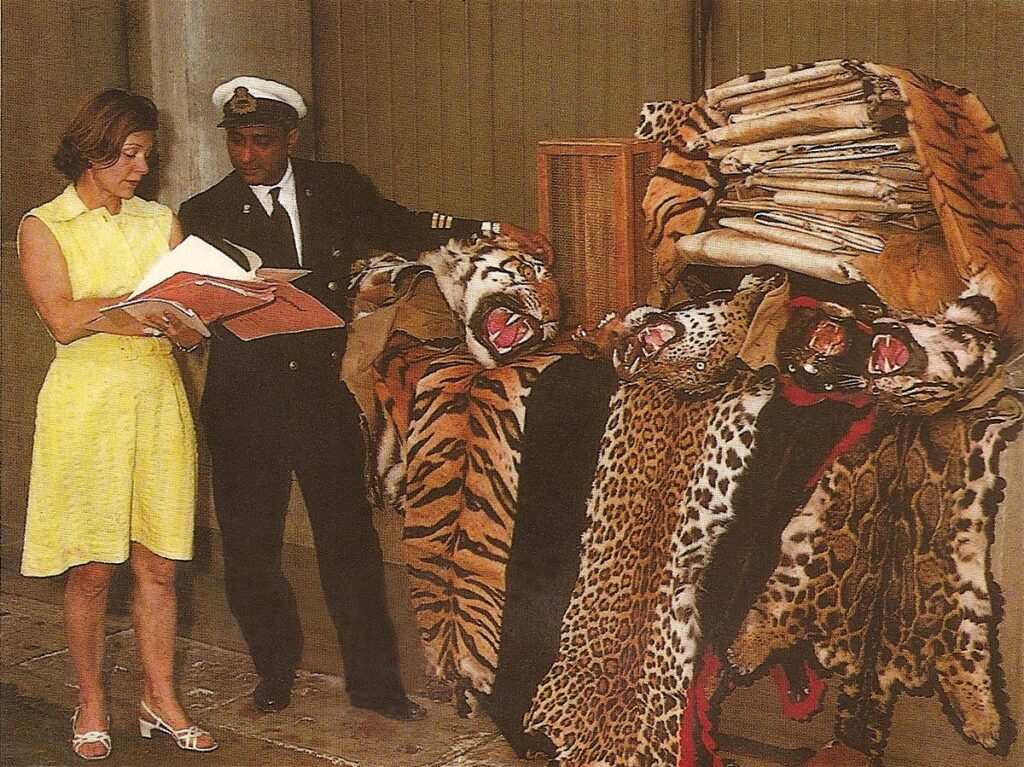
Photo credit: Anne Wright/Wright Family Collection
That same year, Sankhala carried out the first nationwide assessment of India’s tiger population. Drawing upon state census estimates and his own extensive field visits, he concluded that a conservative estimate was just 2,500 tigers.
Then came a turning point.
In November 1969, at the IUCN General Assembly in New Delhi, Sankhala presented a landmark paper titled “The Vanishing Tiger.” It was the first comprehensive account of the tiger’s catastrophic decline in India. The impact was immediate. The tiger was included in the IUCN Red Data Book as an Endangered Species. Around the same time, conservationist Anne Wright went undercover in Calcutta, exposing the city’s thriving tiger-skin smuggling network. Her explosive account, eventually published in The New York Times, caused a national and international furore. The matter was raised in the Indian Parliament, lending further momentum to a growing movement, both in India and internationally, to end tiger hunting.
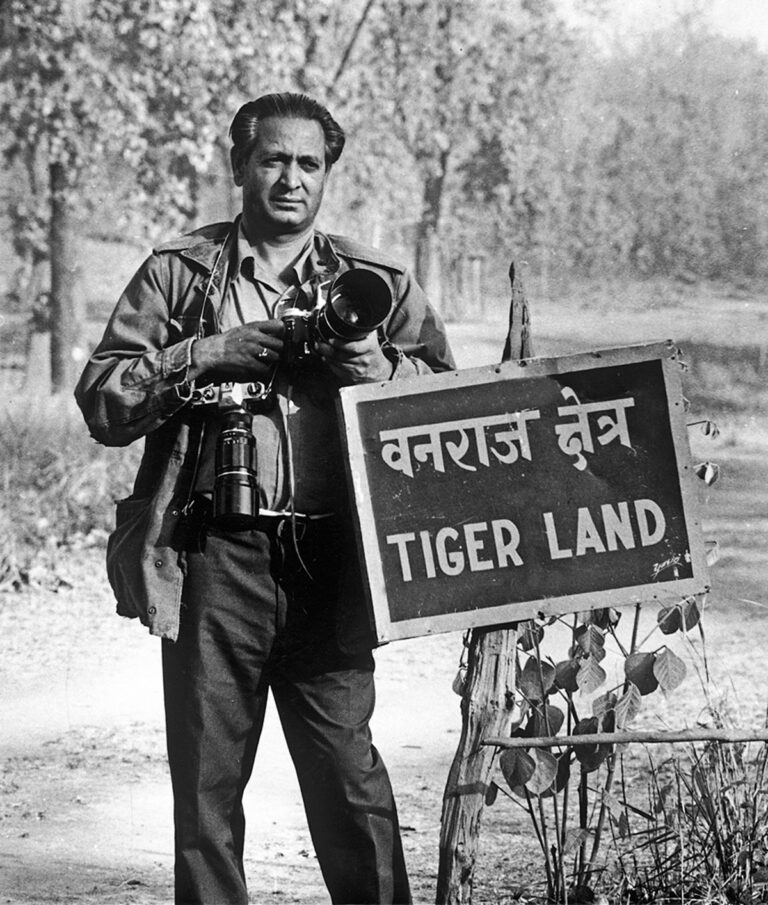
Photo credit: Sanctuary Asia/Sanctuary Photolibrary
Prime Minister Indira Gandhi responded decisively. By July 1970, tiger hunting had been banned throughout India. Just two months later, the export of tiger and leopard skins was also prohibited. Although the hunting ban was challenged by at least 26 commercial Shikar Companies, the Delhi High Court upheld it in 1971. The companies chose not to appeal to the Supreme Court, and with that, the era of legal tiger hunting in India finally came to an end.
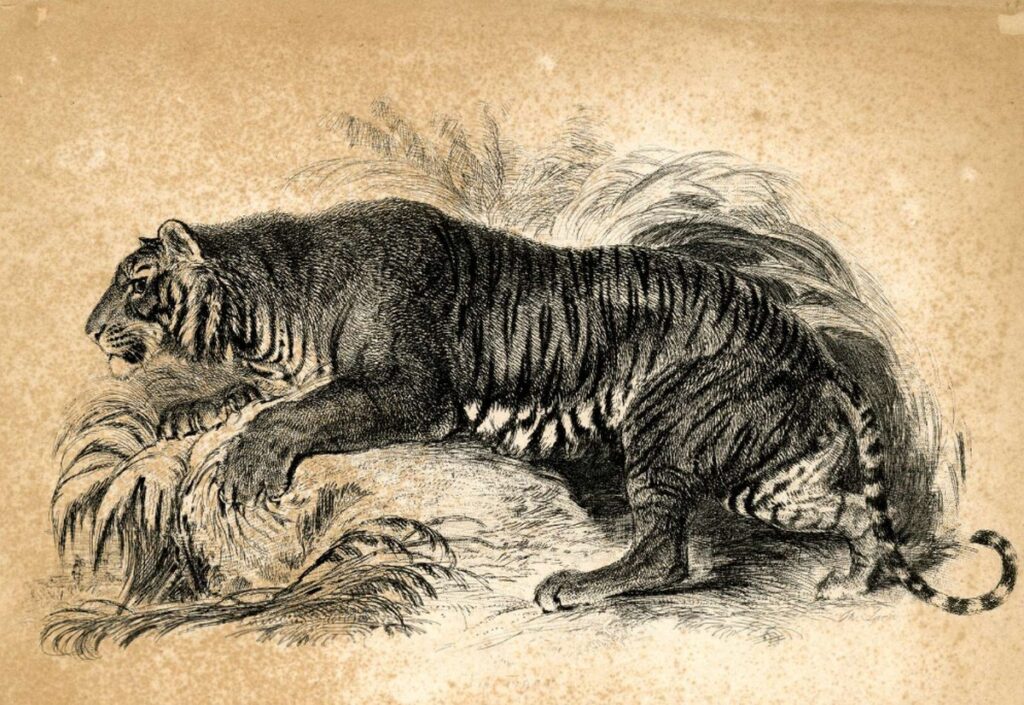
Photo credit: Raza Kazmi Personal Collection
But the crisis was far from over.
India’s first systematic all-India tiger census, conducted in 1972, delivered devastating news. The country had only 1,827 tigers left in the wild.
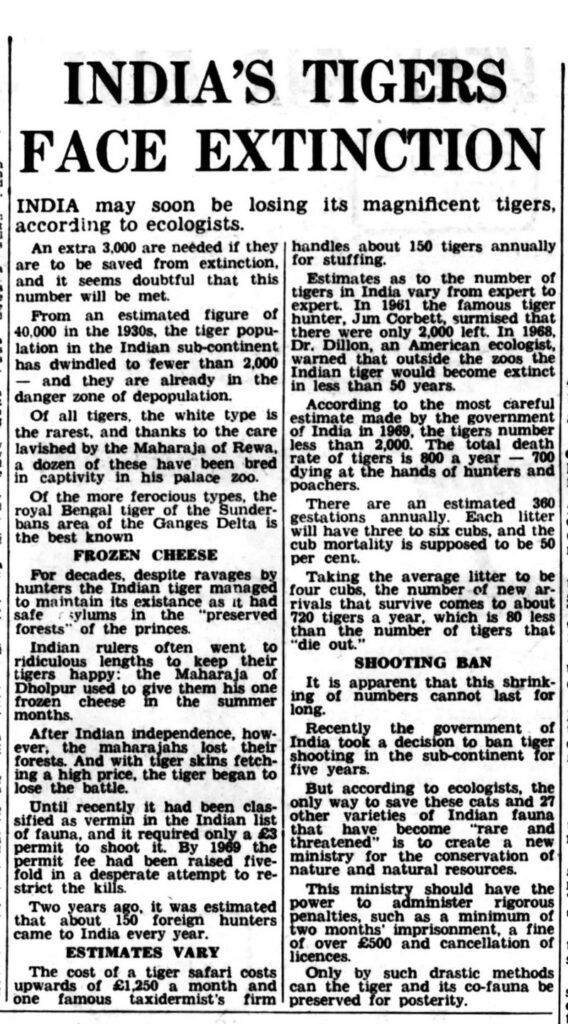
Photo credit: Raza Kazmi Personal Collection
Some regions illustrated the collapse even more starkly. In Odisha, a meticulous census in 1966 under the leadership of the visionary forest officer SR Choudhury had counted 326 tigers. His pugmark census methodology would eventually become the standard technique used across India for more than three decades beginning with the first census in 1972. That year, he found that only 142 remained in Odisha, a decline of nearly 57 percent.
Even after hunting had been banned, poachers continued poisoning tigers to feed the illegal skin trade.
Faced with the possibility of extinction, India chose to fight back.
An 11-member Tiger Task Force was established. The newly enacted Wild Life (Protection) Act, 1972 provided the legal foundation. Drawing upon the Task Force’s recommendations, Project Tiger was formally launched on 1 April 1973 at Corbett National Park.
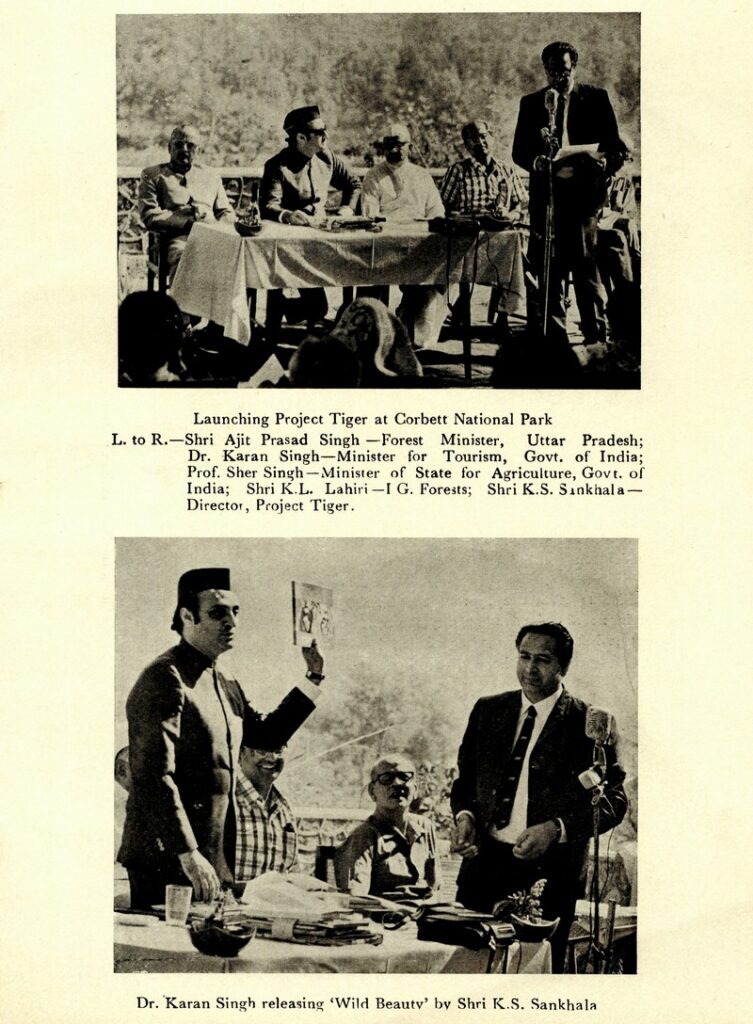
Photo credit: Cheetal/Wildlife Preservation Society of India
Project Tiger was originally conceived as a six-year programme, just as the nationwide ban on tiger hunting had initially been imposed for five years. Fortunately, both would become permanent.
The Task Force had recommended eight tiger reserves representing India’s major tiger habitats. Indira Gandhi personally insisted that the Sundarbans be included as a ninth reserve. Thus were born India’s first nine tiger reserves — Corbett, Palamau, Similipal, Sundarbans, Manas, Ranthambhore, Kanha, Melghat and Bandipur.
This marked the beginning of one of the world’s most ambitious wildlife conservation programmes.
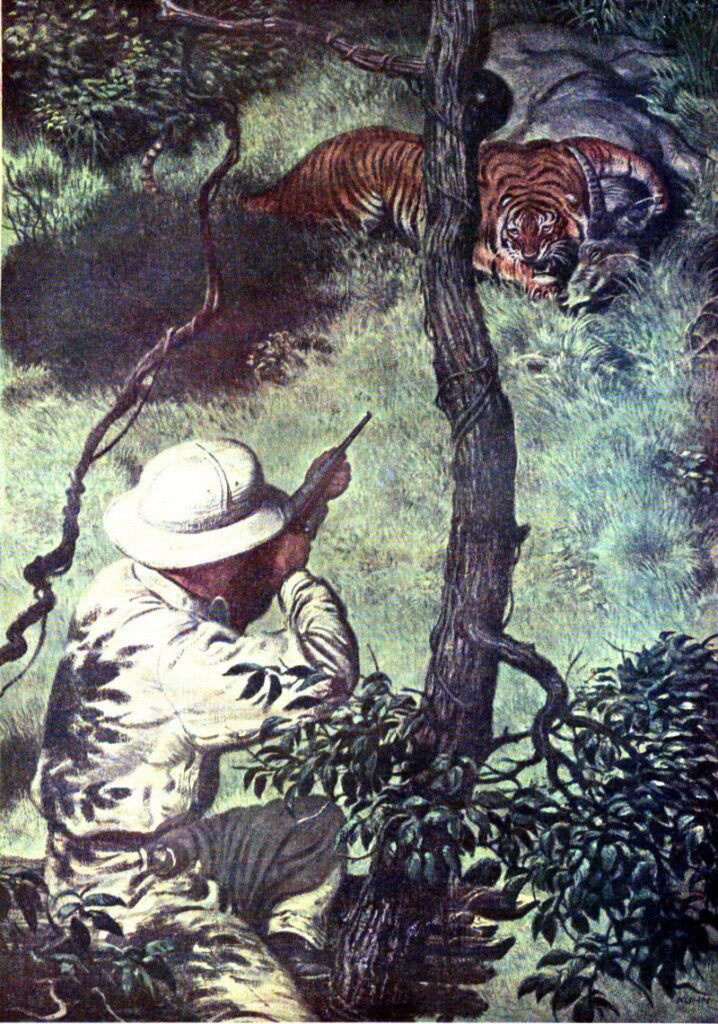
Photo credit: Raza Kazmi Personal Collection
Today, India is home to nearly 4,000 tigers, and the network of tiger reserves has grown from just nine to fifty-eight.
The story of the tiger’s recovery is often celebrated today. But before there could be a recovery, there was a near-collapse. And understanding just how close India came to losing the tiger makes its survival all the more extraordinary.
About the Author: Raza Kazmi is a conservationist, wildlife historian, storyteller, and researcher. He is a Conservation Communicator at WCT and writes in both English and Hindi languages. His writings appear in national newspapers, online media houses, magazines and journals, and various edited anthologies. A recipient of the New India Foundation Fellowship for 2021, he is currently writing a book tentatively titled ‘To Whom Does the Forest Belong?: The Fate of Green in the Land of Red’.
Disclaimer: The author is associated with Wildlife Conservation Trust. The views and opinions expressed in the article are his own and do not necessarily reflect the views and opinions of Wildlife Conservation Trust.
Your donations support our on-ground operations, helping us meet our conservation goals.