
It was February 2014, and winter had begun to fade in Banni. We moved through the rocky tracts of Kutchh, small undulating hills dotted with sparse clumps of euphorbia. The only other green came from patches of the invasive plant Neltuma juliflora, interspersed with small farms. The bumpy ride over the bending roads of the rocky expanse suddenly softened as I entered a flat stretch, the vehicle gliding through a landscape that seemed to hold its breath.
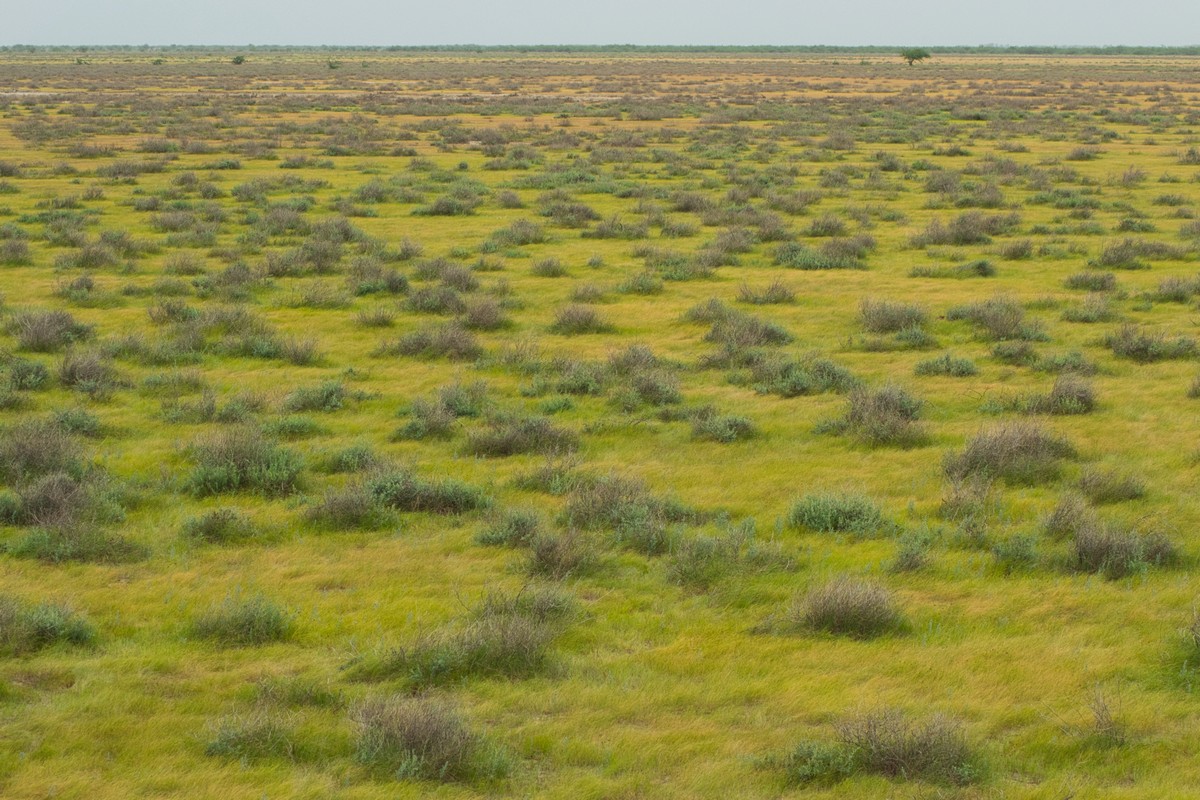
Banni’s expansive plains may be misunderstood as barren ‘wastelands’, but in truth these grasslands form finely tuned Open Natural Ecosystems (ONEs) shaped by weather, wind, water, seasons, and geography. Photo: Dr. Chetan Misher.
At first glance, Banni did not demand attention. To a passing traveller, it can feel empty. Many visitors know it only as the edge of the White Rann, where the famous white desert festival is held. But Banni is much more than that; it just doesn’t show itself on demand, much like an introvert. It reveals itself only to those willing to stay. I had arrived for my Master’s project. The plan was to stay for a few months. Those months quietly turned into years, and years into nearly a decade.
As February nears its end, waterbodies begin to shrink, and grasses shed their green. As March approaches, the land appears to slip into a deep sleep. Within a few weeks, temperatures rise sharply. What starts as dust veils grow into powerful sandstorms by April and May. When the air finally settles, the land is rearranged. Fine sand, lifted and carried by wind, gathers against small shrubs, forming delicate bunds covering the vast land. The saline soil creates the illusion of water in the distance, shimmering under heat, though there may be no water for kilometres. Even as the ground hardens, temperatures soar and visibility blurs, life in Banni grasslands continues – mostly unseen. It thrives beneath the surface, inside burrows, and in the narrow windows of dawn and dusk, invisible to the hurried or unfamiliar eye.
At first glance, Banni did not demand attention. To a passing traveller, it can feel empty. But it is much more; it just doesn’t show itself on demand. It reveals itself only to those willing to stay.
Hurried eyes have long misread such a landscape as ‘wasteland’, mistaking invisible life for absence. That label justified a series of interventions that slowly eroded these ecosystems – not through sudden destruction, but through death by a thousand cuts. Lack of tree canopies is often associated with degradation, yet what seems barren is often a finely tuned system shaped by water, wind, and seasonal pulse. Banni is one such landscape.
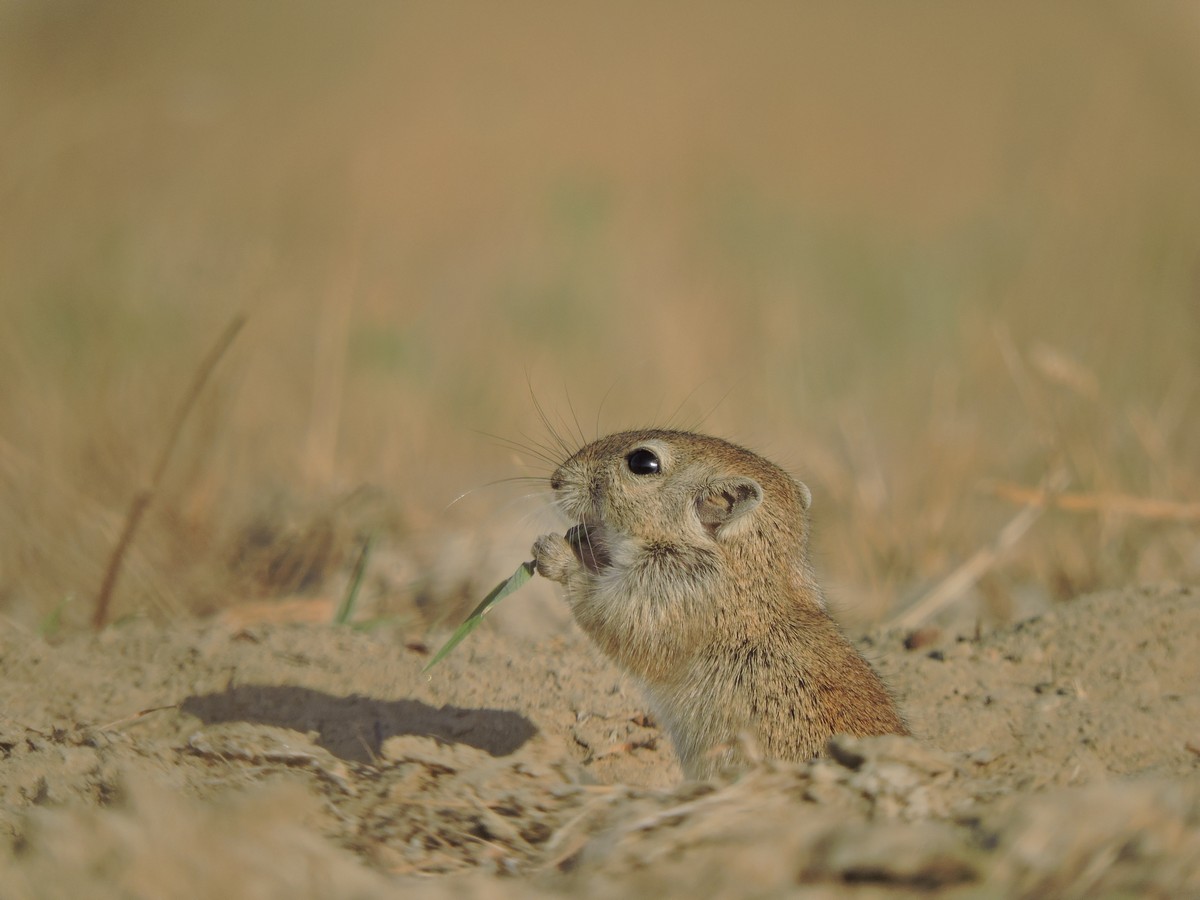
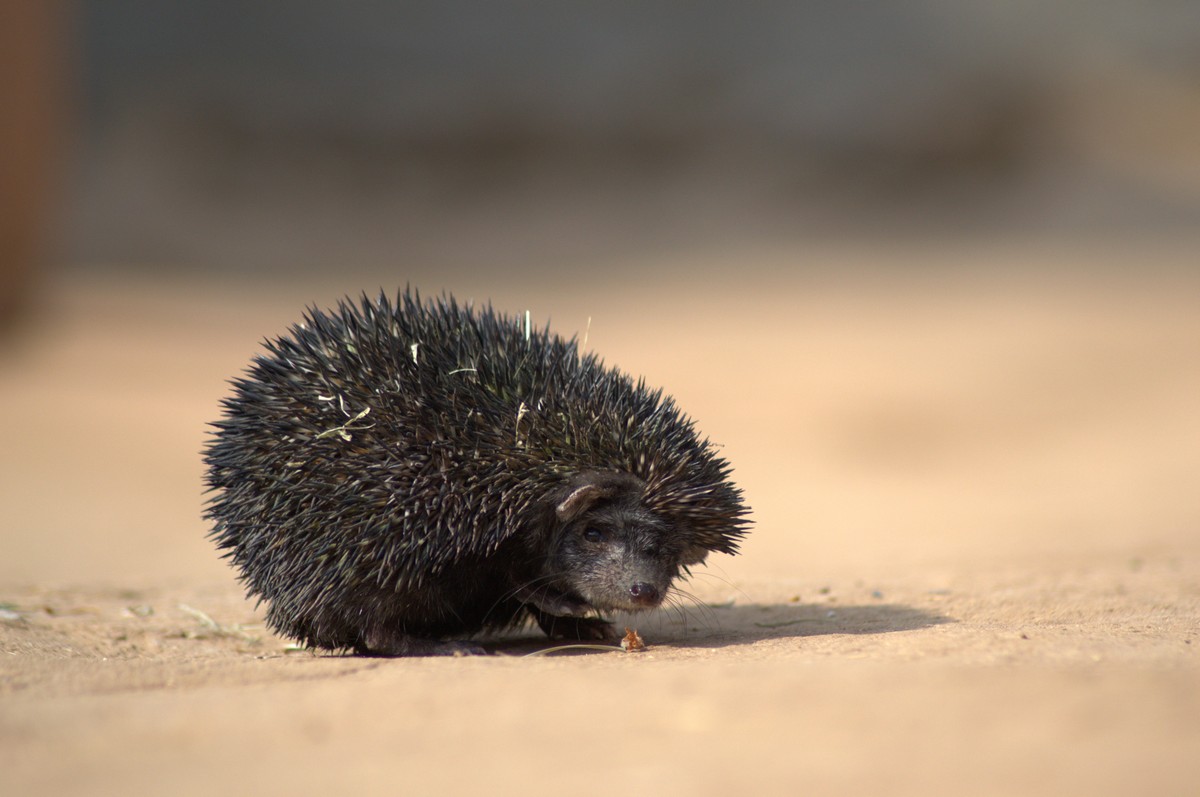
The desert jird (above) and Indian long-eared hedgehog (below) are among the mammals found in the dry grasslands of Banni, which live a largely fossorial existence in burrows underground. Photo: Dr. Chetan Misher.
In Search of the Elusive Fox
After months of searching these plains, I finally caught a fox on a camera trap deployed the previous night. A pup, likely a few months old, emerged, pushing loose sand from a den entrance, soon joined by a lactating female, possibly the mother. Though considered common where I grew up in Rajasthan, the Indian desert fox proved unexpectedly elusive in Banni.
Over the next few days, I located several den sites. Spiny hedgehog skins scattered nearby, along with fresh scat, suggested that many of these dens were active, some perhaps even hiding pups. While speaking with a local elder, I heard a fascinating account of how foxes hunt hedgehogs. According to him, when a hedgehog curls itself into a tight defensive ball, the fox flips it onto its back and urinates on it. The pungent smell is said to force the hedgehog to uncurl slightly to breathe, exposing its nose. The fox promptly seizes it and pulls it free of its spines. Whether entirely true or not, this story is widely told not only in Banni but in other parts of Rajasthan as well.
What is certain, however, is that the Indian desert fox is a dietary generalist. Its omnivorous diet ranges widely – from insects such as termites, ants, dragonflies, crickets, and beetles to nutritionally rich rodents and seasonal fruits. In a desert, where resources are scarce, one cannot afford to be selective. Desert foxes prefer to place their dens in isolated areas away from human habitation, another contrast from what is seen in parts of Rajasthan. As a species that has evolved in open deserts and grasslands, the expansion of Neltuma woodlands in Banni is shrinking its suitable habitat.
Some of the largest flocks of Common Cranes can be seen foraging on freshly emerged grasses. Locally revered as Koonj, they feed on Cyperaceae root tubers, leaving behind clear foraging marks.
An Ever-transforming Banni
It was the end of July. After a brief break from the field, I returned to the landscape I had left only months earlier. Crossing the rocky terrain now familiar to me, I emerged onto what I expected to be vast open plains, only to find them gone. The monsoon had arrived, and with it came a transformation so complete it felt as though someone had repainted the landscape with vivid colours. Shallow water shimmered between patches of green sedges, giving way to a vast carpet of short grasses unfolding for miles. Scattered across this green were clusters of low shrubs such as suaeda, their forms repeating until they dissolved into the horizon. As we drove towards my field station at the heart of Banni, I could do little more than stare, absorbing the beauty of a scene that I had not experienced before. Little did I know that, over the weeks to come, these quiet lands would host a noisy yet symphonic festival.
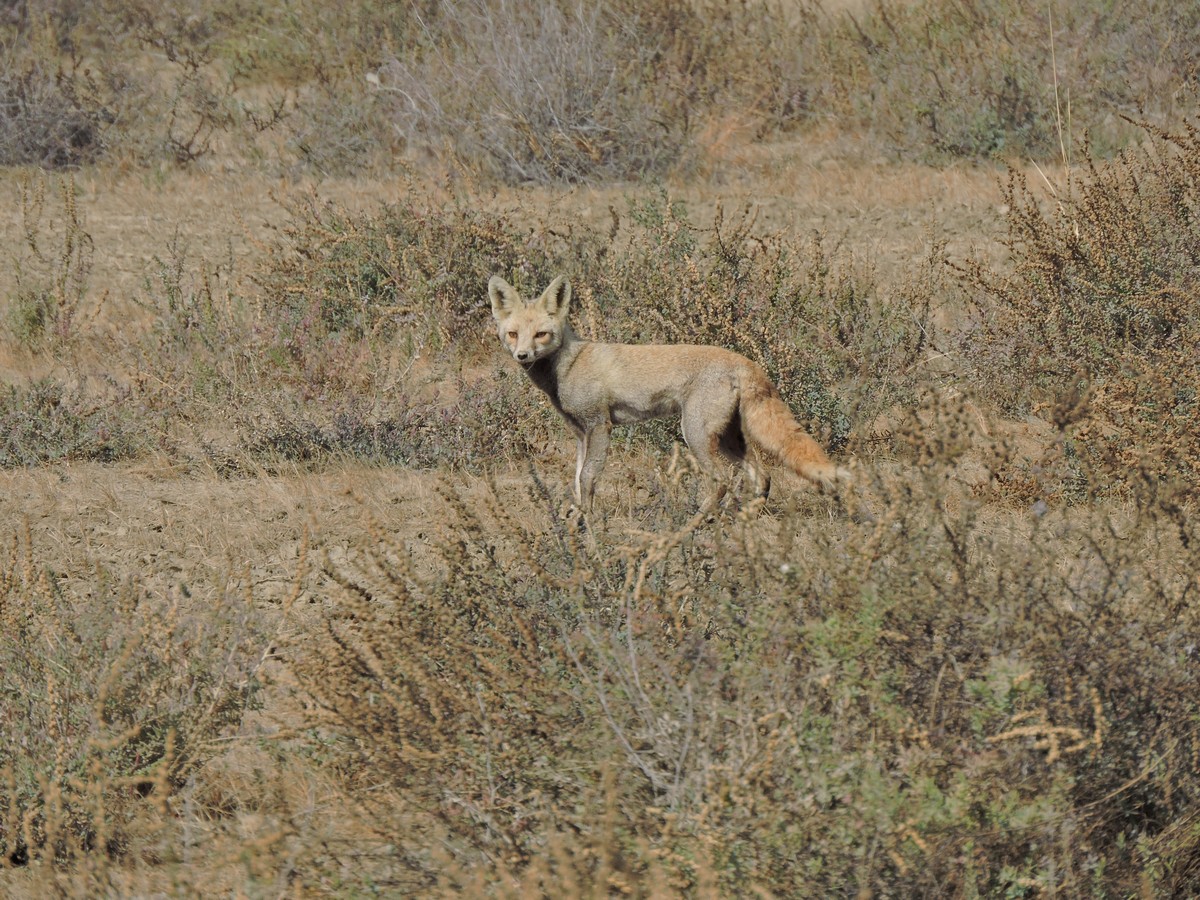
Desert foxes prefer to place their dens in isolated areas away from human habitation, another contrast from what is seen in parts of Rajasthan. As a species that has evolved in open deserts and grasslands, the expansion of Neltuma woodlands in Banni is shrinking its suitable habitat. Photo: Dr. Chetan Misher.
As September arrives, Banni begins to fill with an astonishing diversity of migratory birds. Flocks of ducks, teals, and grebes glide across the water, while pelicans drift heavily in their wake. Egrets and herons occupy the shallows, standing motionless, monk-like, their stillness broken only by sudden strikes. On a winter morning, the rising sun gives warmth to cormorants perched on the bare branches of shrubs along the water’s edge, wings spread wide to dry.
Banni becomes one of the great seasonal hosts for both resident and migratory birds. And it is not only the wetlands that hold this abundance. Beyond them, in the open grasslands, some of the largest flocks of Common Cranes can be seen foraging on freshly emerged grasses. Locally revered as Koonj, they feed on the root tubers of ephemeral Cyperaceae during the day, leaving behind clear foraging marks spread across large patches of soil. By night, they retreat to nearby wetlands, roosting in the centre of shallow water, where even the slightest ripple serves as an early warning against approaching predators.
Fresh grass carpets the ground, insects surge after the monsoon, and spiny-tailed lizards feed intensively, building reserves to carry them through the long winter hibernation ahead.
The monsoon brings a pulse of resources and with it a brief window during which most desert inhabitants begin raising their young before conditions turn harsh again. The den where I recorded my first desert fox in Banni, dug into a vegetated dry wetland, did not survive the monsoon. Waterlogging caused its collapse, forcing the foxes to move. Some individuals, wiser in their choices, reuse dens dug on slightly elevated ground. A desert fox den can stretch up to 10 m., with multiple entrances, providing insulation against both predators and heat.
Driving along a narrow trail near a wetland, tall sedges on one side, and vast open plains on the other, I observed something. Not far from the track on the other side, an Indian fox, clearly a mother, sat alert, her gaze fixed on a nearby steppe eagle. Large raptors such as eagles are known to steal prey from smaller predators, and foxes remain especially vigilant in their presence.
Dry Grasslands as Climate Assets: Lessons from Banni
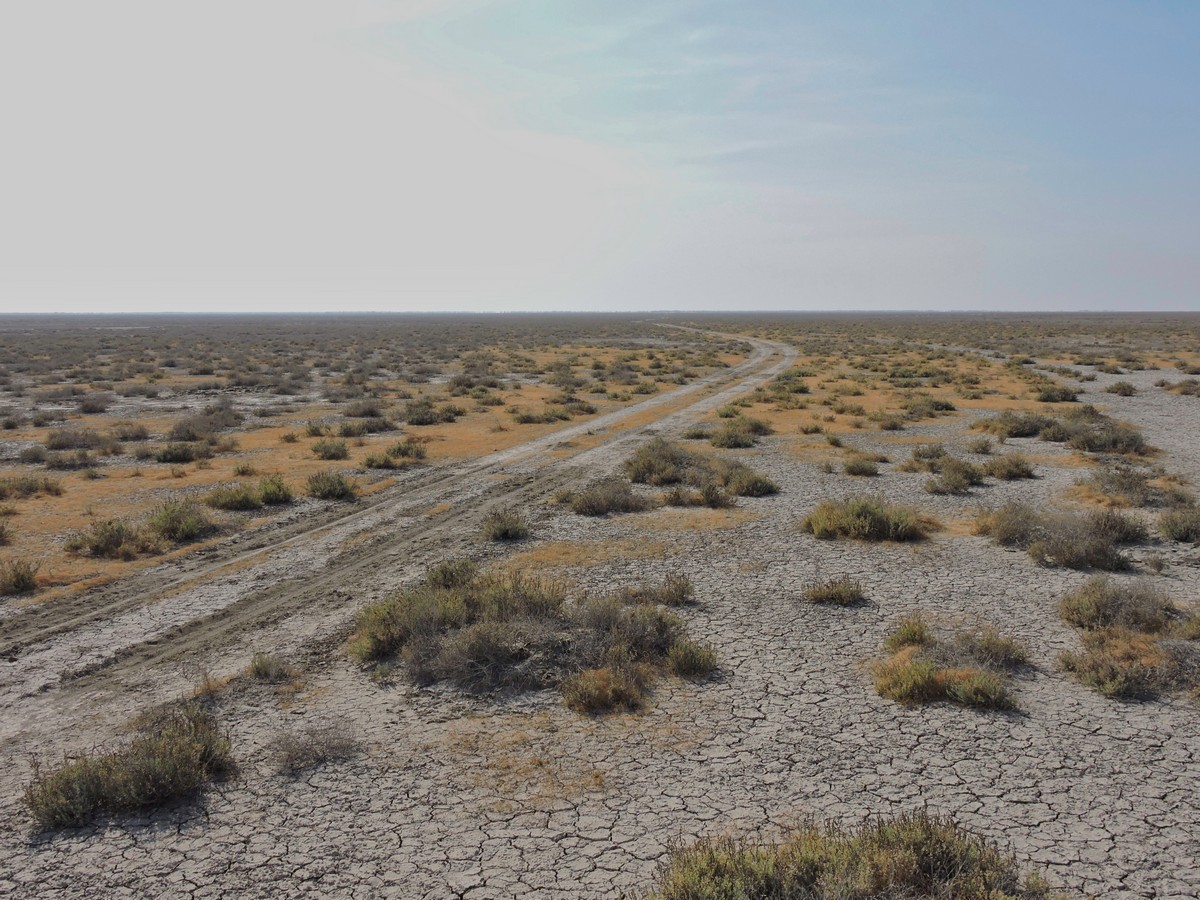
Photo: Dr. Chetan Misher.
Amid transforming seasons and noisy migrants, there is another story of Banni, one that remained conspicuously untold until recently. Beneath its windswept grasses and seasonal wetlands lies one of the most carbon-rich arid grassland soils in the world. Ecologists Manan Bhan, Ankila Hiremath, Abi T. Vanak, and I, embarked on a scientific study to map the amount of carbon stored in the soils of Banni. Our study, published in the Ecological Applications journal in July 2025, found that this landscape stores nearly 27.7 million tonnes of carbon in just the top 30 cm. of its soil! A carbon stock of 121 tonnes per hectare is comparable to that of some of the world’s tropical forests. Remarkably, restored grasslands in Banni store even more carbon than areas invaded by Neltuma juliflora, underscoring how grassland restoration can directly contribute to climate change mitigation. At a time when tree planting is often seen as the default climate solution, Banni reminds us that healthy grassland soils are vast, if quiet, carbon reservoirs.
For the pups under the comfort of their mother’s protection, everything was worth investigating. Dried dung pellets nearby abound with insects – rich and easy protein, the bugs grab their attention. Foxes are not the only ones drawn to such abundance. This is also a season of plenty for spiny-tailed lizards. Fresh grass carpets the ground, insects surge after the monsoon, and the lizards feed intensively, building reserves to carry them through the long winter hibernation ahead. Though largely herbivorous, they opportunistically add insects to their diet during this brief window of abundance.
Even as families are raised and winter preparations begin, a threat looms quietly over the landscape. One winter afternoon, while checking camera traps in the field, two feral dogs on the horizon, leaping repeatedly at a single spot in the middle of nowhere, caught my attention. As I drove closer, the reason became clear: a den opening. It belonged to a fox. Free-ranging dogs are known to harass and hunt wildlife worldwide, and Banni is no exception. That fox may have escaped, but many are not so fortunate. Even when they do not kill directly, dogs pose another threat, diseases such as canine distemper, which have caused severe mortality in wild canids in other grasslands of India.
As winter deepens, Banni grows busier still. A pair of jackals foraging in the brushland have just caught something – a bulky rodent in its jaws. It was a lesser bandicoot rat, a species typically associated with rice fields and moist climates. Data showed that the transformation of open grasslands into invasive woodland may support their expansion into drylands where they were historically absent. Thick canopies of Neltuma provide shelter from predation and relief from daytime heat, creating suitable conditions for them. In effect, one invasion facilitates another.
Under the grip of multiple invasions, Banni renegotiates its future each day. Though changing in scale and character, it remains resilient, for now. The story of its people deserves its own telling, for together, human choices and invasive forces continue to shape this singular ecosystem.
This article was originally published in the April 2026 issue of Sanctuary Asia.
About the Author: Dr. Chetan Misher is an ecologist passionate about India’s grasslands and desert ecosystems. His research explores how new species reshape native wildlife communities and the ecological fabric of these arid regions. Currently, he is working on ecosystem restoration with the Wildlife Conservation Trust in Rajasthan.
Disclaimer: The author is associated with Wildlife Conservation Trust. The views and opinions expressed in the article are his own and do not necessarily reflect the views and opinions of Wildlife Conservation Trust.
Your donations support our on-ground operations, helping us meet our conservation goals.